Monday, June 22, 2015
2015 Audi TT Roadster Release Date


Photos Of The 2015 Audi TT Roadster


Wednesday, June 17, 2015
2015 Lexus GS F Facelift Price
See more 2015 Lexus GS F Facelift & Price
 |
2015 Lexus GS F Facelift & Price |
 |
2015 Lexus GS F Facelift & Price |
2015 Lexus GS F Facelift & Price
Tuesday, May 19, 2015
2015 Hyundai Sonata

Completely redesigning a vehicle competing in a fiercely contested segment requires delicately balancing styling, performance, safety, efficiency, innovation, passenger comfort and pricing, while simultaneously not alienating model loyalists. In other words, its no simple task.
Automakers generally follow one of two paths. Some take a conservative approach and choose to raise each bar marginally, in an effort to appease all and estrange none. Others strategically take risks and focus on specific attributes in an attempt to shift perception about their vehicle.
With its all-new 2015 Sonata, Hyundai has taken the second approach when overhauling one of its best-selling vehicles. The Korean automaker has executed an impressive number of targeted improvements, yet its also softened some of its predecessors qualities in an attempt to demonstrate greater refinement and position its midsize sedan upscale. Whereas the outgoing car successfully aimed to establish itself as a credible contender in the midsize segment, the new model is gunning for customers that might otherwise be seeking entry-level models from luxury automakers.


Montgomery, the capital of Alabama, is an unusual locale to launch a completely redesigned vehicle â€" unless you happen to be Hyundai. The automaker rolled its first new car out of Montgomerys Hyundai Motor Manufacturing Alabama (HMMA) in the southern state in 2005, with its production output hitting 398,000 units in 2013. This year, the plant welcomes assembly of the 2015 Sonata alongside the Elantra, a hot-selling compact sedan that commands 32 percent of its sales. Coming in second place, with 27 percent of the automakers sales, is the four-door, midsize Sonata sedan. Launched in 1998, the all-new 2015 model is a seventh-generation (Hyundai calls it the LF platform) iteration that made its North American debut at this years New York Auto Show.
Rather than toss us the keys in a hotel parking lot, as is common practice, our host gave us a guided tour of HMMA while arranging to have our test cars waiting at the end of the active line. Eager journalists jumped behind the wheel as the sedans crept along a moving conveyor and then drove them out of the factory door for the obligatory photo opportunity.I vaulted into the sportiest and most vibrant of the six new models, a Sport 2.0T sedan painted Urban Sunset.
Following my peers, I vaulted into the sportiest and most vibrant of the six new models (SE, Sport, Limited, Sport 2.0T, Sport 2.0T w/Ultimate, and Eco), a Sport 2.0T sedan painted Urban Sunset with black leather offset with orange piping (the color doesnt translate well in pictures â€" think metallic rust if you want to paint a mental picture). While the base SE model is actually cheaper than last years model at $21,960 (including $810 destination), my test car arrives in showrooms with a base price of $29,385 (including destination). It was wearing no options.
Hyundai is very proud of its new Fluidic Sculpture 2.0 styling language, which is said to reek of "modern premium," but Im still a bigger fan of last years exterior that was at once both more aggressive and youthful. Nevertheless, this fresh, conservative look is decidedly more upmarket and it complements the design of the new Genesis sedan, its recently launched big brother. The new sculpture is also sleeker to the wind, with a drag coefficient of just 0.27 thanks to those carefully crafted panels and a near-full underbody tray to manage airflow. (Its important to note the test car shown here is a Sport model, which features a more aggressive front grille and bumper, side chrome molding and side rocker extensions in addition to a unique rear fascia and quad exhaust outlets.)


Despite my need to warm to the exterior, I have far fewer complaints with the interior, which has moved upscale, mimicking many of the design cues of the premium Genesis sedan. Dropping my six-foot, two-inch frame into the supportive sport seats in the 2.0T (which are about twice as comfortable as the flatter seats of non-sport models) reveals a wider center console that gives the occupants a new sense of personal space. There is less dashboard "wrap-around," which adds an impression of openness. By the tape, the new Sonata boasts 106.1 cubic feet of passenger volume and a total interior volume of 122.4 cubic feet, which allows the midsize sedan to be classified as a large car by the EPA.
Materials, as well as fit and finish, are impressive for a vehicle in this price range â€" again, trickle-down from the Genesis â€" but also required to maintain competitiveness. My Sport model was configured with a meaty flat-bottom steering wheel and textured aluminum trim, which are pleasing to the touch and tasteful (time within a Limited model revealed lamentably fake wood trim that wouldnt fool a kindergartener). In both cases, well-sorted ergonomics meant I wasted no time looking for switchgear.
The Sonatas standard equipment level is generous, with all models fitted with full power accessories, remote keyless entry, premium cloth upholstery and 60/40 split-fold rear seats. Optional equipment, mostly bundled into packages, includes leather upholstery, a panoramic glass moonroof, heated rear seats, Xenon headlights, radar-based cruise control with full stop capability and Hyundais hands-free Smart Trunk, a feature launched on the Genesis sedan. There are no hubcaps in the Sonata lineup, as even the base SE model arrives with 16-inch alloy wheels and 205/65R16 tires (the Sport 2.0T model wears the largest wheel/tire package with 18-inch alloys and 235/45R18 tires).The interior has moved upscale, mimicking many of the design cues of the premium Genesis sedan.
With regards to connectivity, all models come with iPod/USB/AUX inputs, SiriusXM satellite radio and Bluetooth for phones. While the base Sonata lacks a color infotainment display, a five-inch color touchscreen is one model level up with a vibrant eight-inch color display optional. Hyundai is also offering Apple CarPlay integration with certain headunits (late availability) and a 400-watt Infinity premium audio system with next-generation Blue Link telematics.


Not leaving safety out of equation, Hyundai set the Insurance Institute for Highway Safety (IIHS) Top Safety Pick+ rating as its target (the Sonata has yet to be officially tested, but the automaker says its confident it will receive the award). In addition to all of the government-mandated safety gear, the sedan arrives with new standard knee airbags and is offered with optional Lane Departure Warning (LDW), Forward Collision Warning (FCW), Blind Spot Detection (BSD) and Rear Cross-traffic Alert (RCTA).For 2015, the Sonata will be offered with three, four-cylinder engines in the new platform.
Hyundai plotted out a circuitous route on the outskirts of Montgomery that led across highways and two-lane country roads. The weather was lousy, as downpours spoiled most of the best photo opportunities, but traffic was light and the asphalt unbelievably smooth (the only bump in the road was a deceased armadillo â€" no kidding).
Up until a few years ago, the midsize sedan segment was accustomed to four- and six-cylinder engine offerings, but Hyundai forged a new path for the class in 2009 when it introduced the sixth-generation Sonata with nothing but a range of four-cylinder engines. The companys logic was sound â€" a lower-displacement turbocharged engine can offer identical power and better efficiency, while the smaller packaging requirements of a four-cylinder allow the firewall to be pushed forward, thereby giving more space to the occupants. Hyundai customers have seemed indifferent about the loss of a six-cylinder option, so the automaker hasnt altered its tune. For the 2015 model year, the Sonata will be offered with three, four-cylinder engines in the new platform (the Hybrid will continue to be offered on the previous-generation platform until 2016).
Of the three combustion engines, two are returning to the Sonata after being updated and one is new to the model.


The standard 2.4-liter Theta II GDI four-cylinder engine, which is fitted to the SE, Sport and Limited models, arrives with a new power rating of 185 horsepower and 178 pound-feet of torque (last year, it was rated at 190 horsepower and 179 pound-feet). Upgraded with Electronic Intake Continuously Variable Valve Timing (E-CVVT), the engine trades in five horsepower and a single pound-foot to offer "better responsiveness in lower-RPM situations where customers spend the majority of their time," says the automaker. It has also been tuned for improved cold-weather performance and reduced emissions. The engine is mated to a six-speed automatic transmission sending power to the front wheels. Its preliminary fuel economy ratings are 24 miles per gallon city, 35 highway and 28 combined (the SE model is rated slightly higher, at 25/37/29).
The optional 2.0-liter Theta II turbocharged GDI four-cylinder, which is fitted to the Sport 2.0T models, is also equipped with E-CVVT. It arrives with a new rating of 245 hp and 260 lb-ft (last year, it was rated at 274 hp and 269 lb-ft). The significantly decreased output rating is a result of a new, smaller turbocharger â€" less mass means it spools quicker and improves driveability. Like the 2.4-liter, it is mated to a six-speed automatic driving the front wheels. Its fuel economy ratings are 23 city, 32 highway, 26 combined.The optional 2.0-liter turbocharged GDI four-cylinder arrives with a new rating of 245 hp and 260 lb-ft.
Fuel mileage numbers are up very slightly across the Sonata range, when comparing the new engine variants with the old. Those seeking the greatest efficiency this side of the hybrid offering, however, have another option for 2015.
The new engine in the model range is a 1.6-liter turbocharged inline-four, which will be standard in the Eco variant, and its rated at 177 hp and 195 lb-ft of torque. Unlike its siblings, the low-displacement powerplant is bolted to an all-new, seven-speed, dual-clutch automatic transmission. Its preliminary fuel economy ratings are 28 city, 38 highway, and 32 combined.
To better tailor the powertrain to the driver and driving conditions, all Sonata models are equipped with three drive modes (Eco, Normal and Sport) selectable via a pushbutton switch located just aft of the transmission shift lever. In a nutshell, each configuration alters the engine response, transmission shift points and steering wheel weight to suit the mode. By default, the vehicle starts in Normal each time with a dash light alerting the driver to any changes.

I drove all three models back-to-back in Alabama, and it didnt take long for me to choose my favorite.
The 2.4-liter doesnt feel much different than its predecessor. Good gearing within the automatic transmission allows the naturally aspirated engine to move the 3,252-pound Sonata 2.4 quickly off the line, but it loses some steam once it gets above city speeds. The gearbox is quick to downshift, but it doesnt have the torque to push anyones skull against their head restraints. Although it doesnt have any issue holding highway speeds on grades, passing maneuvers will require planning and plenty of space, especially with a vehicle loaded with four adults and luggage. The 2.4-liter is a decent standard engine, but it wont get anyones juices flowing â€" Ill leave it at that.My preferred engine is the 1.6-liter with the turbocharger mated to the DCT. Its a brilliant little combo.
Bolting a smaller turbocharger on the 2.0-liter four definitely removes some of its steam, as I recall last years Sonata 2.0T feeling a bit quicker (Im betting the 2015 version is slower in the 0-60 sprint). The automatic transmission puts in a herculean effort to keep the engine in its powerband, making passing at speed much easier â€" but the loss of 29 horses is a blow to performance in the 3,505-pound 2.0T (its the heaviest trim). The upside is that fuel economy on the city cycle, when the turbocharger is most likely to be utilized, is improved over its predecessor. The big downside is that the sportiest Sonata variant no longer stands a chance against the V6-equipped competition in terms of driver engagement.
My preferred engine is the 1.6-liter with the turbocharger mated to the DCT. Its a brilliant little combo, which easily pulls the Sonata briskly around town, yet it sips fuel on the highway to deliver nearly 40 mpg. The engine is smooth and the shifts from the gearbox are nearly imperceptible, an impressive feat given this is a DCT. In manual mode, activated by pulling the transmission lever towards the driver, aggressive shifting has the needle jumping around the tachometer with lightning-quick reflexes. The 3,270-pound Sonata Eco is by no means the enthusiast model, but it has the eager heart of a sport sedan.


All Sonata models share the same suspension, but there are two different braking and steering systems and wheel/tire options. Hyundai has deservedly accepted some criticism over suspension tuning in past years, but its recently launched Genesis sedan proves that its engineering team is on the right track. To bring the 2015 Sonata up to similar speed, the company is using reinforced side and crossmembers to strengthen the new chassis and improve suspension responsiveness. The chassis doesnt just receive more bracing, the automaker says it employs more high-strength steel to net 41-percent stiffer torsional rigidity and 35-percent improved bending resistance, all of which help let the suspension do its work.The chassis employs more high-strength steel to net 41-percent stiffer torsional rigidity and 35-percent improved bending resistance.
Up front are MacPherson struts, with revised subframe bushings, while the rear relies on a redesigned multilink system that employs dual lower arms to increase lateral stability and improve ride quality. Sport 2.0T models feature more aggressively tuned dampers and springs. New geometry makes the sedan more stable under braking (and contributes to a short stopping distance). Glass-smooth asphalt roads thwarted any thorough test of the new underpinnings, but a few dips and railroad crossings hit at above-average speeds revealed an improved and well-controlled ride that could meet, or exceed, best in class. Transitional stability is good, with the Sonata feeling stable through sweepers. Cornering grip is mostly tire limited.
All Sonata models are fitted with four-wheel disc brakes, but the Turbo and Ultimate models arrive with slightly larger rotors (12.6-inch units up front) for a heavier duty cycle. Pedal feel is reassuring at all speeds, with good modulation. I simulated a panic stop from 60 mph and the Sonata stopped straight and in a surprisingly short distance, with ABS clacking away but without much drama. I wish all midsize sedans stopped as well.

Configuring vehicles with more than one steering rack is common in this segment, as automakers choose equipment to keep costs down. All models, with the exception of the Sport 2.0T, arrive with a column-mounted Motor-Driven Power Steering (MDPS) unit. The Sport 2.0T has a premium rack-mounted MDPS, which is tuned for the enthusiast. Both are engine-RPM-sensing for variable effort. Being completely frank, I was unable to sense a difference between the two racks during a full days worth of driving (blame a lack of canyon roads to exercise the Sonata). Both were light and a bit numb in the feedback category, but very stable and nicely weighed on the highway.
Without reservation, I like the new Sonata. After a full day inside its cabin, I emerged with a smile, no aching appendages and at a loss to reveal any glaring negative qualities or traits that would prevent me from recommending it to friends or family. But the midsize sedan category is intimidating. The Sonata competes in an extremely competitive segment that includes the Chevrolet Malibu, Chrysler 200, Ford Fusion, Honda Accord, Mazda6, Nissan Altima, Toyota Camry, and Volkswagen Passat, and I cant fail to mention its own cousin, the Kia Optima. A glance at each reveals that none are weak adversaries.I emerged with a smile, no aching appendages and at a loss to reveal any glaring negative qualities.
Most would expect Hyundai to counter with an all-new vehicle that follows the path forged by the outgoing model. But rather than introducing a seventh-generation Sonata that pursues its predecessors objective, which was to establish itself as a credible contender in the midsize sedan segment, Hyundai appears to have much more focused ambitions for its new arrival. By putting economy over performance and using the Genesis sedan as its role model, it has tasked the 2015 Sonata with a more important ambition â€" going upscale. The resulting four-door sedan is a safe, fuel-efficient, premium offering with an attractive sticker price.
Friday, May 15, 2015
2015 Hyundai Tucson Fuel Cell

Hyundai leased its first Tucson Fuel Cell crossover last week, which the automaker claims makes it the first mass-produced fuel cell vehicle (FCV) that has been offered to the public (Honda may have something to say about that...). The vehicle, which consumes hydrogen and emits only clean water vapor from its exhaust pipe, will initially only be offered for lease in Los Angeles and Orange Counties â€" two regions with the greatest density of approved hydrogen stations in the country â€" at a monthly fee of $499. Since the Tucson FCV rolls down the same Ulsan, Korea, production line as its gasoline-powered relative, production is scalable based on customer demand.
We attended the festivities with the dignitaries and elected officials - clapping until our hands hurt. But once it was ove r, we grabbed a set of keys and took the new FCV for a half-hour jaunt. According to the press materials, written with a welcomed sense of humor, Hyundai will offer it in three colors: white, white and optional white. Our test model was the latter.
Driving Notes
- The outside of the FCV is difficult to distinguish from the combustion version, until one gets close enough to see the "Hydrogen EV" cladding on the sides, the "Blue Drive" on the front doors or the "Fuel Cell" on the rear liftgate. The lack of exhaust pipe (one exists, but it is tucked out of view) is another giveaway. Subtle aero improvements have dropped the coefficient of drag from 0.37 to 0.35 (overall length, width and height are essentially identical between the models).
- Hyundai has hidden two 10,000-psi Kevlar-wrapped tanks inside the Tucson Fuel Cell. The larger tank is just aft of the rear axle, with its dome raising the rear decklid floor by a couple inches (nearly imperceptible). The smaller tank is located just in front of the rear axle, beneath the passenger seats in the space normally occupied by a gasoline tank. The tanks are bulletproof â€" literally â€" having been tested for burst, drop, and gunfire resistance. If there is a leak, hydrogen sensors will alert occupants (there is a flush rectangular sensor on the roof of the cabin, just behind the drivers head near the dome light). If there is a fire, a pressure-release valve will vent the hydrogen in a controlled manner to prevent damage from overpressure.
- In operation, a fuel cell vehicle acts and drives much like an electric vehicle. The Tucson Fuel Cell driver faces a familiar two-pod instrument cluster, with an analog charge/power dial on the left and an analog speedometer on the right. Set inside the power dial is a digital segment temperature gauge for the coolant. While electric vehicles typically dont have coolant, the FCV uses the liquid to cool its fuel stack and electronics. The digital segment fuel level gauge, set inside the speedometer, displays the balance of hydrogen in the tank. A digital multifunction display, between the two dials, offers trip computer information and instant MPGe readings.
- The standard Tucson Limited FWD, with a 2.4-liter combustion engine, tips the scales at 3,294 pounds. Brace yourself, as the Tucson Fuel Cell is a whopping 807 pounds heavier. Hyundai engineers note swapping the gasoline engine for a fuel stack under the front hood is virtually a wash, and the two Kevlar-wrapped fuel tanks dont add much weight. The bulk of the added mass comes from the 24-kW lithium polymer battery pack. Normally, packing on that much weight has negative effects on driving dynamics - but not this time. The low-slung and compact weight (all situated below the passenger cabin) acts like a ballast inertia damper, countering the bouncing and jarring effects of driving down the road. Unlike its combustion-powered sibling, which can follow undulations in the pavement, the Tucson Fuel Cell glides like a silent electric limousine.
- Compared to its combustion sibling, the Tucson Fuel Cell falls 48 horsepower shy, and it has all of that aforementioned mass to lug around. Have no worries, as the FCVs torque output is 44 pound-feet greater, and its available right off the bat. While a 0-60 time of about 11.5 seconds wont cause whiplash, the emission-free crossover feels rather zippy between 15 and 45 miles per hour, which is likely where it will spend most of its time. It is expectedly lethargic off the line, and overtaking at highway speeds requires a bit of planning, but if you keep it in the sweet spot, its rather enjoyable.
- Hyundai fits the FCV with slightly larger front disc brakes (to accommodate the increased curb weight) that are part of a regenerative braking system that pumps energy back into the battery pack. Brake feel is okay, but the driver is definitely aware of the two-tons beneath his jeans. The steering, with slightly different ratios, is overboosted, light and uncommunicative â€" but it adds to the sense of isolation, so many will approve. Transitional handling is safe and predictable, but unexciting â€" anyone who shows up at an autocross with a Tucson Fuel Cell crossover is lost.
- Government officials in California havent figured out how to properly charge for hydrogen fuel (once they develop a pump that can reliably weigh the fuel while dispensing, expect it to be sold by the kilogram), so Tucson Fuel Cell owners enjoy free fuel from six Los Angeles-area stations during the term of their lease. The programs are capped at 12,000 miles a year, so owners wont break the bank. Each of the stations is equipped with a 700-bar pump fitted with a WEH TK17 pistol-grip nozzle that is held just like a common gasoline/diesel nozzle. Once the female nozzle is connected securely to the male nipple on the vehicle, an infrared ring around the nozzle communicates data wirelessly with the vehicle during fueling â€" it is clean and very high tech. At todays dispensing rates, it takes about 10 minutes to fill an empty "tank" (two tanks, actually). A full tank, which is 12.4 pounds of hydrogen, delivers a range of about 265 miles.
If you are an Angelino seeking a no-compromise emissions-free vehicle, the Koreans may have just written your hydrogen song.
Thursday, May 14, 2015
2015 Jeep Grand Wagoneer Concept Pictures
 |
2015 Jeep Grand Wagoneer Concept & Pictures |
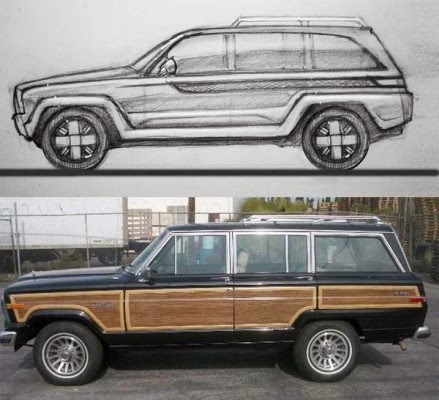 |
2015 Jeep Grand Wagoneer Concept & Pictures |
 |
2015 Jeep Grand Wagoneer Concept & Pictures |
Monday, May 11, 2015
2015 Dodge Durango
2015 Dodge Durango – Big, but Not Huge

2015 Durango – Engine Options
Style Changes of 2015 Durango

2015 Dodge Durango on Australian Market
Saturday, May 9, 2015
2015 Ford Focus ST Specs Release Date And Price
2015 Ford Focus ST Specs, Release Date And Price
 |
| 2015 Ford Focus ST Specs,Release Date And Price |
2015 Ford Focus ST Specs,Release Date And Price
Wednesday, April 29, 2015
2015 Aston Martin V12 Vantage S Roadster


Race car technology


Pure power, beautifully presented

Q by Aston Martin


